

Mistakes That Break Handmade Jewelry: A Complete Guide to Making Stronger DIY Jewelry
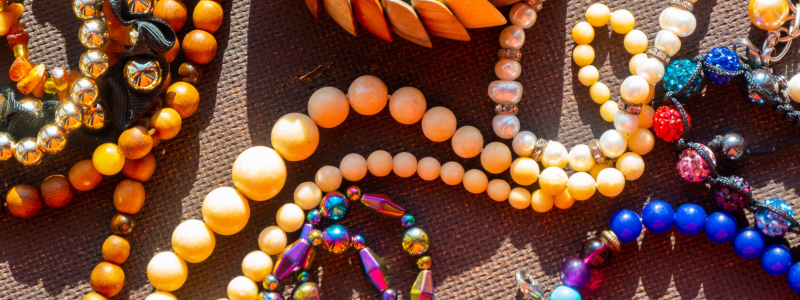
You've finished a natural stone bracelet, carefully assembled a custom necklace, or made a lovely pair of earrings. Yet, after a few days or weeks of use, a bead falls off, a ring opens, or the chain breaks without warning.
This situation is frustrating, but it's rarely due to a defect in the supplies themselves. In most cases, breakage comes from a design error, a poor choice of materials, or an unanticipated stress point.
Jewellery almost always breaks in the same places: near the clasp, at a jump ring, a bail, a setting, or an area subjected to repeated friction.
The good news is that most of these problems can be avoided by understanding how mechanical stresses affect a piece of jewellery.
Understanding why jewellery breaks
Before addressing the most common mistakes, it's important to understand that every piece of jewellery is subjected to several forces.
Tension
Tension corresponds to a force that pulls on the jewellery. This is the case, for example, when a necklace supports a heavy pendant, when a bracelet is stretched to be put on, or when a chain gets caught in clothing.
Repeated tension can gradually weaken a wire, open a ring, or deform a link.
Friction
Friction is often invisible. A wire can rub hundreds of times against the edge of a bead or a ring before suddenly breaking.
The most exposed areas are clasps, connectors, bails, beads with rough edges, and jump rings.
Impacts
A bracelet regularly bumps against a table, a keyboard, a bag, or a countertop. Each impact slightly weakens the most stressed areas.
Metal fatigue
Even a solid metal can wear out over time. A chain that always bends in the same place, a ring that has been opened multiple times, or an overused clasp gradually loses its strength.
Mistake #1: Choosing a wire unsuitable for the project
Not all creations require the same type of wire. A common mistake is to use the same wire for all jewellery.
A wire might be perfect for a light acrylic bead bracelet but completely insufficient for a natural stone bracelet or a heavy necklace.

Concrete example
You are making a bracelet with 8mm amethyst beads on a very thin elastic cord. The bracelet will seem solid during assembly, but the weight of the stones and repeated stretching risk quickly damaging the elastic.
How to choose the right wire?
- For stretch bracelets: opt for a quality elastic cord, suitable for the diameter and weight of the beads.
- For natural stones: use a coated steel wire or abrasion-resistant wire.
- For bead weaving: choose a specialized thread like Fireline, Miyuki, or equivalent.
- For lightweight creations: a nylon, polyester, or thin cable wire may be suitable depending on the assembly.
Mistake #2: Underestimating the weight of natural stones
Natural stones are beautiful, but they are also much heavier than resin, acrylic, or polymer beads.
Two bracelets may look visually similar but exert completely different tension on the wire.
For example, an 8mm acrylic bead bracelet will be much lighter than a labradorite, jasper, or quartz bracelet of the same diameter.
This difference directly influences:
- the choice of wire;
- the choice of clasp;
- the choice of rings;
- the overall strength of the jewellery.
The heavier a piece of jewellery, the more its attachment points must be reinforced.

Mistake #3: Using a chain too thin for a heavy pendant
This mistake is very common. We often choose a chain for its style, fineness, or color, without considering the weight of the pendant.
Result: the links deform, the chain lengthens, some points become more fragile, and the necklace eventually breaks.
A simple rule
The heavier or bulkier the pendant, the more robust the chain should be.
A thin chain remains ideal for small pendants, minimalist jewellery, and lightweight creations. However, natural stone pendants, thick medallions, large charms, or steel pendants require a stronger chain.
Also remember to adapt the clasp and jump ring to the weight of the pendant.
Mistake #4: Improperly closing jump rings
Jump rings are one of the most frequent weak points in handmade jewellery.
A simple gap of a few tenths of a millimeter can be enough for a chain, charm, or bail to slip out.
The wrong technique
Avoid opening the ring by spreading the two ends outwards. This technique deforms the circle and makes the closure less reliable.
The right technique
Use two pairs of pliers. Rotate one end of the ring forward and the other backward. Then close it with the reverse movement until the two edges touch perfectly.
This method preserves the original shape of the ring and limits the risk of it opening.
Mistake #5: Neglecting the quality of findings
Not all findings are created equal. A clasp that is too light, a ring that is too flexible, or a connector made of very thin metal risks deforming quickly.
The most stressed elements are:
- clasps;
- jump rings;
- bails;
- crimps;
- connectors;
- earring findings.
For jewellery worn regularly, stainless steel findings are often an excellent choice, as they offer good resistance to daily use.
Mistake #6: Improperly using crimp beads
Crimp beads are very practical for finishing a cabled piece of jewellery. But if they are poorly applied, they can become a breaking point.
Common mistakes
- crimping too hard;
- using a crimp bead that is too small;
- using unsuitable pliers;
- letting the cable rub directly against a ring;
- using a crimp bead on a wire not designed for it.
A crimp bead must hold the cable without cutting or damaging it. If it is too tight, it can weaken the wire instead of securing it.
Mistake #7: Ignoring friction zones
Friction is one of the most subtle causes of breakage. It acts slowly, but repeatedly.
The most sensitive areas are:
- the ends near the clasp;
- jump rings;
- connectors;
- bails;
- beads with irregular holes.
To reinforce these areas, you can use wire guards, closed rings, coated cable, or finishes adapted to the type of assembly.
Mistake #8: Using beads with abrasive holes without precaution
Some natural stone, glass, or metal beads may have a slightly rough hole. With each movement, the edge of the bead rubs against the wire.
This phenomenon may seem negligible, but it can eventually cut the wire after several uses.
This is particularly important with:
- heavy natural stones;
- metal beads;
- glass beads with irregular edges;
- antique or artisanal beads;
- beads with very narrow holes.
In this case, it is better to use a stronger wire, double the wire, or use a coated steel cable.
Mistake #9: Overloading jewellery
Multiplying charms, pendants, and beads can make a piece of jewellery visually rich. But each additional element adds weight and creates stress points.
A charm-laden bracelet will be subjected to much more stress than a minimalist bracelet. It rubs more, bumps against surfaces more often, and heavily stresses the jump rings.
For more durable jewellery, try to distribute the weight, use solid rings, and avoid concentrating too many elements on a single attachment point.
Mistake #10: Wearing jewellery in the shower, pool, or during sports
Even quality jewellery is not designed to be constantly exposed to water, chlorine, salt, perspiration, cosmetics, or household products.
These elements can:
- weaken certain wires;
- accelerate the wear of findings;
- tarnish certain finishes;
- attack glues;
- promote the opening of certain assemblies.
The simple rule to remember: jewellery is put on last and taken off first.

Mistake #11: Sleeping with your jewellery on
Sleeping with jewellery increases the risk of pulling, twisting, and snagging.
A necklace can get caught in hair, clothing, or bedsheets. A bracelet can be accidentally crushed or pulled during the night.
Removing your jewellery before sleeping remains one of the best habits to extend its lifespan.
Mistake #12: Ignoring warning signs
Jewellery rarely breaks without warning. Certain signs should alert you:
- a clasp that doesn't close as well;
- a slightly open ring;
- a frayed wire;
- a deformed chain;
- a bead that moves abnormally;
- a knot that becomes visible;
- thinned metal;
- a charm that pulls too much on its attachment.
A quick check can often prevent the complete loss of the jewellery.
Quick diagnostic table
| Observed Problem | Probable Cause | Recommended Solution |
|---|---|---|
| Broken elastic bracelet | Elastic cord too thin or overstressed | Use a larger diameter and secure the knot |
| Necklace broken near the clasp | Repeated friction | Add a wire guard or redo the finishing |
| Lost pendant | Jump ring improperly closed | Properly close the ring or choose a stronger ring |
| Lost beads | Crimp bead improperly set | Redo the finishing with suitable pliers |
| Deformed chain | Pendant too heavy | Choose a more robust chain |
| Worn or cut wire | Abrasive bead hole | Use a coated cable or a more resistant wire |
Checklist before gifting or wearing handmade jewellery
- All rings are perfectly closed.
- The clasp works correctly.
- Crimp beads are well positioned.
- No wire is visible, frayed, or worn.
- The pendant is suitable for the chain.
- Stress points are reinforced.
- The jewellery has been tested with slight pulling.
- Beads do not cut or damage the wire.
FAQ: Handmade jewellery that breaks
Why does my elastic bracelet always break?
An elastic bracelet often breaks because the wire is too thin, too old, overstretched, or unsuitable for the weight of the beads. Heavy natural stones require a strong elastic and a well-secured knot.
What wire to choose for natural stones?
For natural stones, it is advisable to use a coated steel cable or abrasion-resistant wire. Since stones are heavier than fancy beads, they exert more tension on the assembly.
Why do jump rings open?
Jump rings open when they are improperly closed, too thin, or overstressed. They should be opened laterally, with two pairs of pliers, then closed until the two ends touch perfectly.
How to prevent a necklace from breaking near the clasp?
Breakage near the clasp is often related to repeated friction. To limit this risk, use a wire guard, choose a clasp suitable for the weight of the jewellery, and regularly check the condition of the assembly.
Should I put glue on an elastic bracelet?
Yes, a small amount of suitable glue can help secure the knot of an elastic bracelet. However, don't use too much, as excess glue can stiffen the wire and weaken it.
What chain to choose for a heavy pendant?
For a heavy pendant, choose a chain with thicker links, a sturdy clasp, and a suitable jump ring. Stainless steel is often a good choice for jewellery worn regularly.
How to know if jewellery is overloaded?
Jewellery is likely overloaded if the elements pull on the rings, if the chain deforms, or if the bracelet becomes uncomfortable. In this case, it is better to distribute the weight or reinforce the attachments.
Can natural beads damage the wire?
Yes, some natural beads have slightly rough holes. They can gradually wear down the wire by rubbing. To avoid this, use a coated cable, a more resistant wire, or check the holes before assembly.
Conclusion
Durable jewellery does not depend solely on the quality of the beads or metal used. Its strength relies on its overall design: choice of wire, quality of findings, weight distribution, friction management, and stress point control.
By adopting a few best practices from the start of assembly, you will significantly increase the lifespan of your creations and make DIY jewellery that is more reliable, more comfortable, and more resistant to everyday wear.